

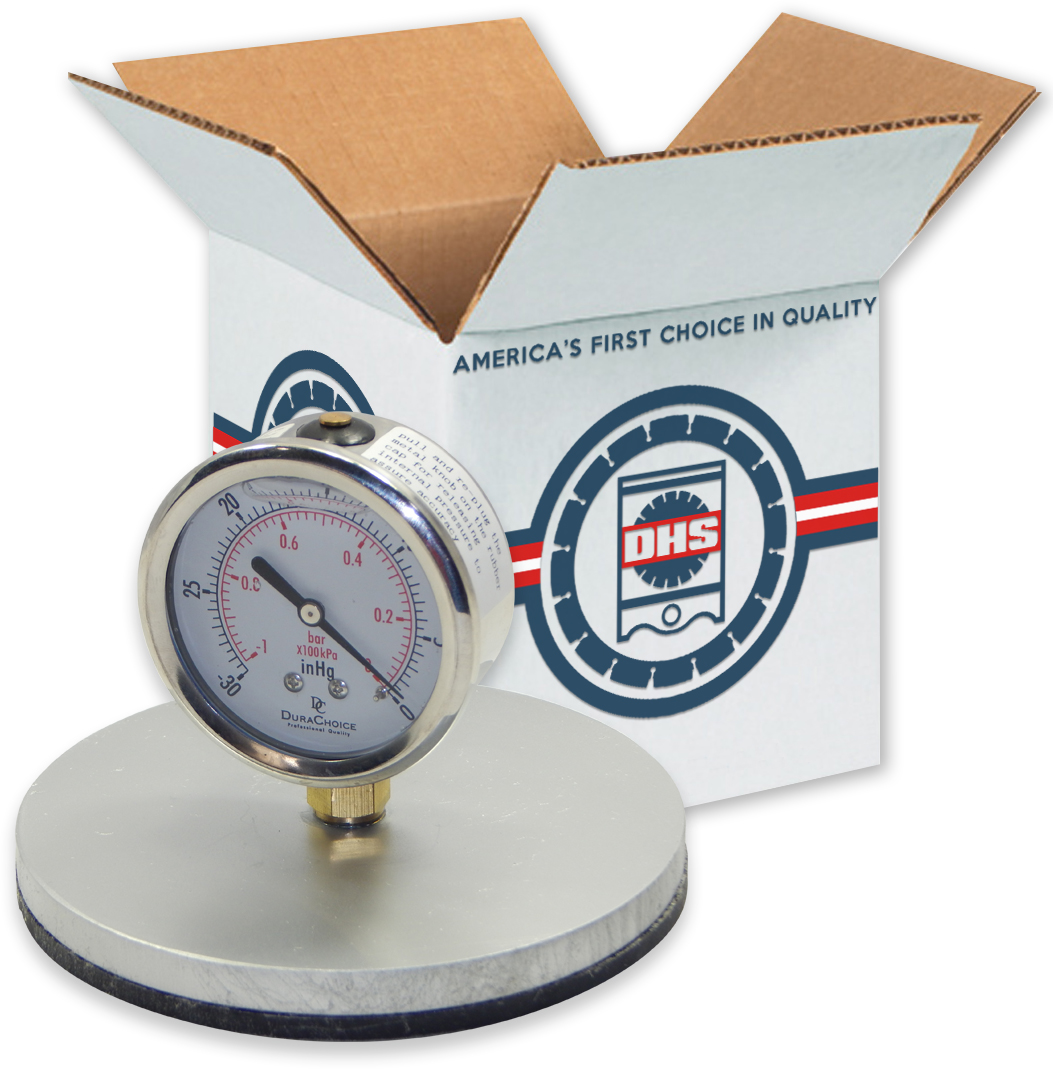
This pump vacuum test gauge is a valuable tool for diagnosing pump performance. Poor suction, poor hose connections, defective o-rings, and pinholes in your suction hose can lead to under-performance and loss of suction. This gauge allows you to accurately test the vacuum of your pump and gives you the best diagnoses for suction issues. This is an aftermarket tool, replacing Wacker Neuson part number 0028755.
It requires 1 pound of vacuum to pull water up 1 foot; 20 pounds of vacuum to pull water up 20 feet.
How to Use:
- Fill pump housing with cold water until it flows out from the discharge port
- Tighten pump cover and prime plug
- Bring engine up to operating speed (check engine RPM)
Note: Keep pump housing filled with water at all times while pump is running. If too much water is lost during the test procedure, stop the engine and reprime the pump. It may be necessary to tilt the pump or partially cover the discharge port, to prevent water in the pump housing from being lost while still allowing air to be vented.
- Grease the mounting face of the vacuum gauge to ensure a good seal
- Press gauge over inlet port
- Gauge reading should slowly climb and then hold steady
- With gauge still against the inlet port, turn off the engine. The gauge reading should not change
Note: This test MUST be completed within a few minutes to prevent the water in the pump housing from getting hot, which will result in lower readings. If possible, allow cold water to run into the discharge part while testing pump.
Excellent: 20-24 in.HG | 68-82 KPa
Satisfactory: 16-20 in.HG | 55-68 KPa
Check out this pump test gauge in our online store.

Author: David Schatz
David Schatz is the founder of DHS Equipment and a technical content expert in light construction equipment, small engines, and professional-grade replacement parts. With more than 30 years of hands-on experience servicing concrete saws, generators, water pumps, and plate compactors, he helps contractors, rental fleets, and serious DIY users keep their equipment running safely and efficiently.
Through practical, no-nonsense articles, step-by-step guides, and maintenance tips, David focuses on real-world troubleshooting, small engine repair, and clear recommendations on OEM and high-quality aftermarket replacement components that reduce downtime, extend equipment life, and improve job site productivity.